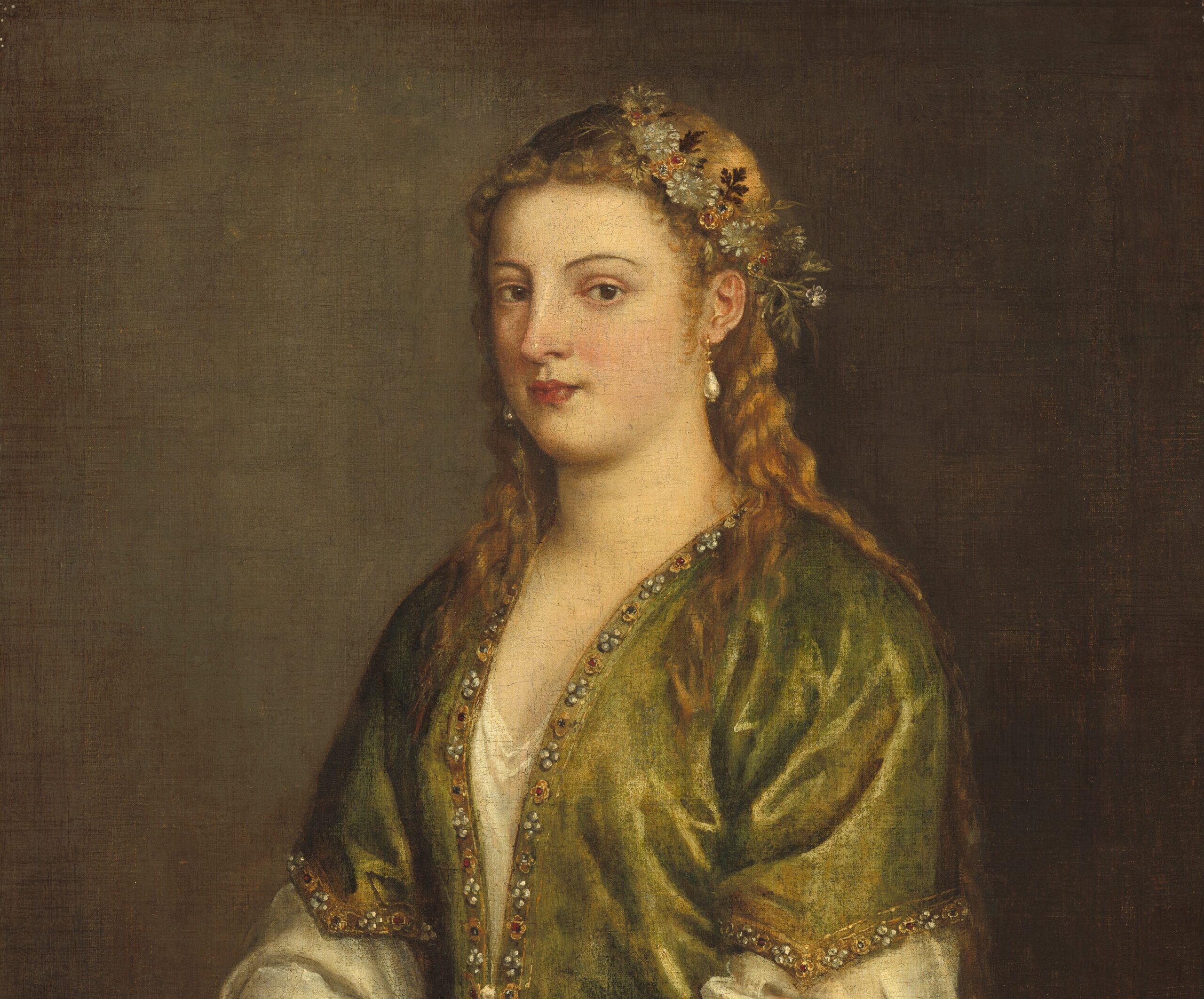
My summer composing project was a setting of Robert Browning’s “My Last Duchess.” I’ve been intrigued with the poem ever since I heard James Mason read it on a Caedmon Records LP back in the 60s. Browning’s dramatic monologue is loosely based on Alfonso II d’Este, Duke of Ferrara in late 16th century Italy. We hear the Duke negotiating a marriage contract with the emissary of a noble family while proudly displaying his art collection, including a portrait of his former wife. Although he praises the portrait, the self-centered, jealous Duke cannot restrain himself from castigating the young Duchess, who often expressed her innocent delight in the simple joys of life. While she was alive, his increasing irritation led to “commands; then all smiles stopped together.” The real Duke was 25 at the time of his first marriage to Lucrezia di Cosimo de’ Medici, who was only 14. She died two years later. Poisoning by the Duke was suspected, but tuberculosis is the more widely accepted cause of death.
The music illustrates the text – the men’s footsteps in the gallery; the curtain over the painting drawn back; the light-hearted young Duchess; the cold shiver when we realize what has happened to her. It continually returns to a B Phrygian tonal center – the Duke’s querulous, overbearing insistence on his own superiority. The spare accompaniment is ornamented in Italian Renaissance style.